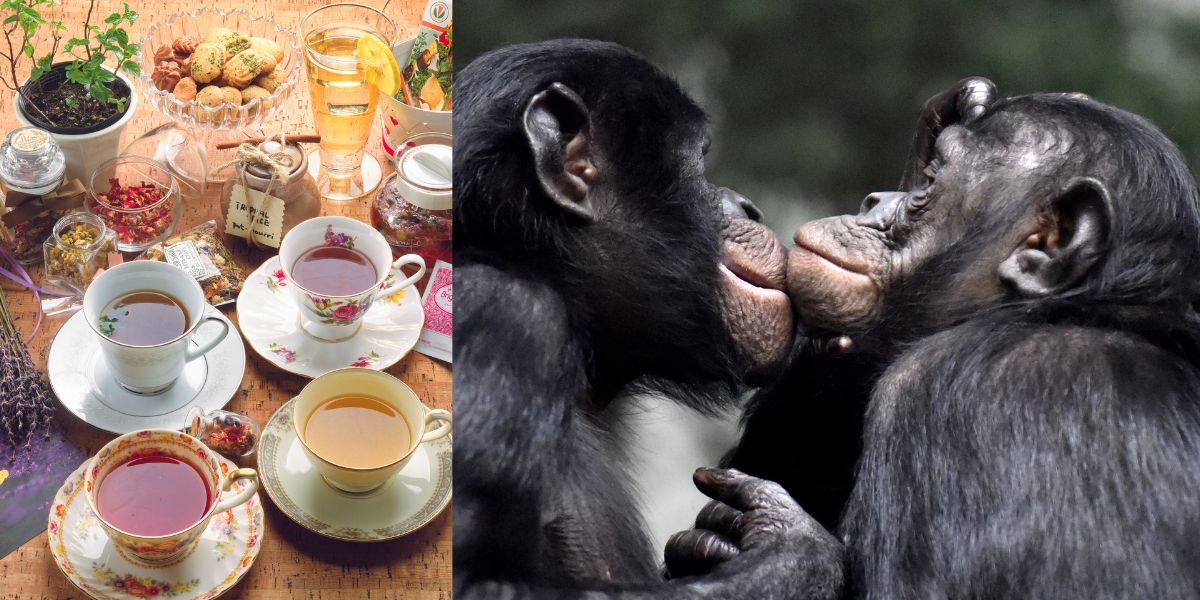
A playful experiment involving a bonobo has offered new insight into how apes may be capable of imagination, something scientists once considered uniquely human. Researchers observed the primate participating in a pretend tea party, following steps that indicated it was keeping track of imaginary food and drink rather than relying on physical cues. According to reporting from Oddee, the behaviour suggests apes might share “human‑like imaginative abilities” based on how they interacted with empty cups and invented scenarios.
Bonobos behaved much like a child engaged in make‑believe. The animal poured invisible juice, shared imaginary grapes, and continued these actions consistently, showing it wasn’t simply mimicking human handlers. Scientists argue this kind of pretend play demonstrates an ability to conceptualise things that do not physically exist in the moment.
Johns Hopkins University researchers ran related tea‑party‑style tests to determine whether apes could manage imaginary tasks. Their findings, published through multiple science news sites, suggest these primates can remember invented storylines and maintain them throughout the experiment. This mirrors the type of imaginative play children naturally develop around age two, where creativity guides their interactions more than the real objects around them.
The discovery has prompted fresh discussion about how much of our cognitive world we truly share with our closest relatives. Instead of seeing imagination as exclusively human, researchers now recognise early versions of this trait in other primates. The bonobo’s behaviour builds on decades of work exploring animal intelligence, but the tea party experiments stand out for how clearly they capture pretend play, once believed to be beyond non‑human species.
Scientists say the next step is to run more structured tests with different individuals to see whether imagination is widespread among apes or unique to specific personalities. Regardless, the findings signal an exciting shift in how we understand creativity, prompting new questions about the roots of storytelling, play, and even human culture.